Home / Learn / Surcharge vs. cash discount vs. dual pricing
Surcharge vs. cash discount vs. dual pricing.
All three help you offset what card payments cost. They differ in where the price starts, which cards they touch and what your customers see before they pay.
Three ways to offset card costs
| Surcharge | Fee added to credit |
| Cash discount | Discount for cash |
| Dual pricing | Two prices posted |
| Surcharge on debit | Not allowed |
| Signs and receipts | Needed for all three |
Card-brand and state rules change. Check current rules.
A surcharge adds a fee to credit card payments, a cash discount takes money off the posted price when a customer pays cash, and dual pricing posts a cash price and a card price side by side. In the surcharge vs. cash discount vs. dual pricing choice, the biggest practical difference is that a surcharge can only touch credit cards, while the card price under the other two applies to debit cards as well.
Each approach is allowed when it is set up within card-brand rules. Each one also feels different to customers, works better in some industries than others and needs different settings on your terminal or POS. Here is how they compare.
The three approaches side by side
| Surcharge | Cash discount | Dual pricing | |
| Posted price | Cash price | Card price | Both prices |
| What changes at checkout | A fee is added for credit | A discount is taken for cash | Customer pays the price for their method |
| Debit cards | Never surcharged | Pay the card price | Pay the card price |
| Prepaid cards | Never surcharged | Pay the card price | Pay the card price |
| Cap | 3% or cost, if lower | Set by card-brand rules | Set by card-brand rules |
| Receipt shows | Surcharge on its own line | Discount or price paid | The price paid |
One table can’t hold every detail, and card-brand rules change. Check current card-brand and state rules for any approach before you launch.
Surcharging: a fee on credit
With surcharging, your posted prices are what a cash or debit customer pays. When someone pays with a credit card, the system adds a surcharge at checkout. The surcharge is capped at 3%, or your actual cost of accepting credit if that is lower, and it must be disclosed at entry and at checkout and printed on the receipt.
- Works well for: businesses with large tickets and customers who pay with rewards or corporate cards, such as B2B suppliers and professional services.
- Watch out for: debit detection. Debit and prepaid cards can never be surcharged, even when run as credit, so you need BIN-based detection.
- Keep in mind: some states restrict surcharging, and the card brands may require advance notice.
See what is surcharging for the full picture.
Cash discount: a discount for cash
A cash discount program flips the logic. Your posted price is the card price. Customers who pay cash get a discount at the register. Because nothing is being added for cards, the card price applies to every card, including debit and prepaid.
- Works well for: counter businesses, service shops and restaurants where many customers still pay cash.
- Watch out for: programs that call themselves a cash discount but really add a fee for cards at the register. Card-brand rules look at how the program actually works, not what it is called.
- Keep in mind: clear signs are essential, and your posted prices must match what the terminal charges.
Our cash discount program guide covers setup and signage in detail.
Dual pricing: both prices, up front
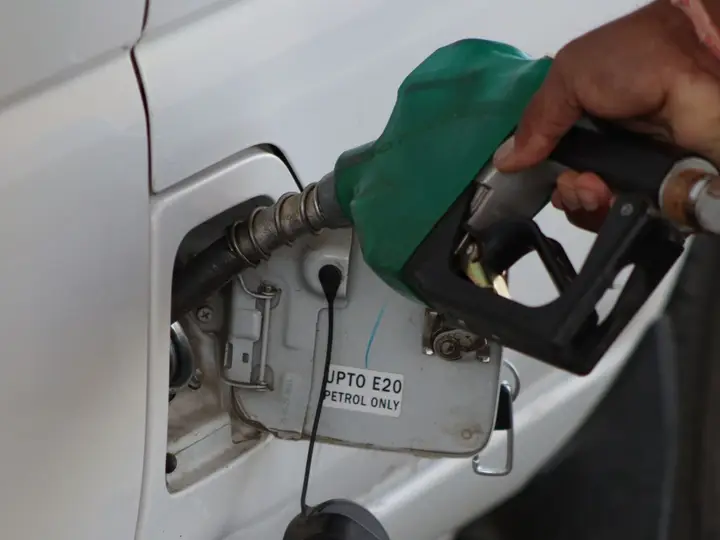
Dual pricing shows two prices for every item: a cash price and a card price. Customers see both before they decide how to pay, and the receipt shows the price for the method they used. Fuel stations are a familiar example, where both prices are posted on the sign.
- Works well for: businesses where posted prices are already visible, such as fuel, menus and price boards.
- Watch out for: keeping both prices accurate everywhere they appear: shelves, menus, websites and the POS.
- Keep in mind: it is the most transparent of the three, which tends to mean fewer surprised customers.
The same $50 sale, three ways
Picture a $50.00 sale where your cost to accept a credit card is 3%. With a 3% surcharge, the posted price is $50.00, a credit customer pays $51.50 and a debit customer pays $50.00. With a cash discount, the posted price might be $50.00, and a cash customer receives a discount at the register while every card customer pays $50.00. With dual pricing, the sign shows a cash price and a $50.00 card price, and each customer pays the one for their method. The numbers are illustrations only. Your own prices and discounts should come from your real costs and current rules.
How to choose between them
There isn’t a single right answer. These questions usually point the way:
- How do your customers pay? If many use debit, a surcharge won’t touch those payments, while a cash discount or dual pricing will.
- What is your average ticket? On large B2B invoices, a surcharge on credit cards may be the cleaner fit.
- Where are your prices shown? Dual pricing needs space to post two prices clearly.
- What will your customers accept? Some industries are used to surcharges. Others react better to a discount for cash.
- What do the current rules say where you operate? Some states restrict surcharging, and rules on pricing displays vary.
- What is your real cost? If your processing rate is too high to begin with, lowering it may matter more than any of these programs.
Nothing here is legal advice. Card-brand rules and state rules change, so confirm current rules and talk with your own advisor if you are unsure.
What PayZoom does
PayZoom sets up all three. We build surcharging programs capped at 3% with BIN-based debit detection and a separate receipt line, and we set up cash discount and dual pricing programs with terminal and receipt settings that match your posted prices. We help you plan signs and review current rules before launch.
Because we are platform-agnostic, we fit the program to your current POS, gateway or cart where we can. And we start with a free statement analysis, so you know your real cost of acceptance before you choose. Call 866.242.4325 and a real person will walk through the options with you.
Want a straight answer about your own statement?
Send us one recent statement. We line-item every fee and tell you what you are really paying. Free, no pressure.
Or call 866.242.4325. A real person answers.
Not only did PayZoom lower our costs, they analyzed our internal processes and made recommendations to improve workflow and provided new equipment so we could capture electronic payments at all points in the hospital and at off-site locations.
Jim Bishop, CPA, Controller, Jennie Stuart Medical Center
Since 2006, a person who knows your account.
| Founded | 2006, Daphne, Alabama |
| Clients in | Nearly every U.S. state |
| Support | Never outsourced |
| Registered partner of | Cygnus Payments and Evolv Payment Solutions |
Questions merchants ask us
Straight answers. If yours is not here, call us and a real person will answer it.
Which option saves the most money?
It depends on how your customers pay. A surcharge only applies to credit cards, so debit payments still cost you the full processing fee. A cash discount or dual pricing applies the card price to all cards. But the best fit also depends on customer reaction and current rules where you operate. Your statement shows which mix makes sense.
Can I combine surcharging and a cash discount?
Running both on the same sale tends to confuse customers and can create compliance problems, because the two programs are built on different logic. Most merchants pick one. Some businesses use different approaches in different channels, but that needs careful setup. Talk with your processor before mixing programs, and check current card-brand rules.
Is dual pricing the same as a cash discount?
They are close cousins. Both start from the idea that cash customers pay less. A cash discount posts the card price and takes money off at the register. Dual pricing posts both prices up front, so customers see each one before choosing. Dual pricing gives more information sooner, which some customers appreciate.
Do these programs work online?
Surcharging can work online with proper notice on your website and payment page. Cash discounts and dual pricing are harder online, since most online payments are by card. For e-commerce and invoices, a surcharge or a straightforward review of your processing cost is usually the more practical route. We can look at your setup with you.




Guides on this topic
Send us one statement. We’ll tell you exactly what you’re paying.
No cost and no pressure. If your current rate is fair, we’ll say so. We typically reply the same business day.
| Call toll-free | 866.242.4325 |
| Local | 251.626.8100 |
| nate@bizpayzoom.com |